
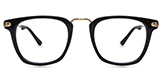
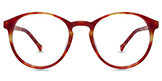
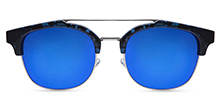
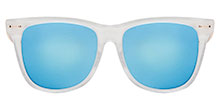
The evaluation of various safety glasses
Article Tags: goggles, safety glasses
Prevent Blindness America reports that 700,000 cases of eye injury happen at work every year in the United States, and the figures of eye injuries at home and during sport are 125,000 and 40,000 respectively. It is also estimated that 90% of these injuries can be prevented by using proper protective eyewear. These facts suggest that the use of safety eyewear is of great importance. Maintaining eye health is a crucial task for every person. Even ordinary people are encouraged to know some basic guidelines for safety eyewear, like lens and frame impact-resistance tests, lens material and safety eyewear for different uses.
Definition of safety eyewear
Regular eyeglasses can not be qualified as safety glasses. Both the frames and lenses of safety glasses must meet a higher standard of impact resistance. In U.S. the OSHA (Occupational Safety and Health Administration) is responsible for supervising workplace safety practices and has adopted safety glasses standards established by ANSI (American National Standards Institute). Protective products that are forced to obey these standards include eyeglasses, goggles, face shields, welding helmets and full-face respirators.
Impact tests of lenses
ANSI safety eyewear standards include some key features. Safety lenses have two main types: basic impact and high impact. The impact classification can be determined by a “drop ball” test. The one-inch diameter steel ball will be dropped onto the lens from a height of 50 inches. Basic impact tests examine lenses separately and high impact tests evaluate the frame and lenses in together. Thinner prescription lenses should withstand the high impact testing. Lenses always have a “+” mark if they have high impact approval. “V” represents a photochromic lens and “S” stands for a lens with special tint.
Polycarbonate lenses for safety eyewear
Lightweight polycarbonate is the most favorable material for safety eyewear lenses. Polycarbonate lenses are unusually impact-resistant. While reducing lens reflections, anti-reflective coating may affect the impact resistance of certain lenses. A prior impact resistance test is important before applying AR coating. Another shortcoming has been widely reported that polycarbonate lenses are much softer than glass lenses. This explains why polycarbonate lenses are typically manufactured with a scratch-resistant coating.
Impact and durability tests of frames
There are also some tests for the frames of safety eyeglasses and goggles. High mass impact test of frames uses a 17.6-ounce steel projectile. Frames that can retain the lens during the test will pass the test. Durability tests of frames include flammability-resistance test, corrosion-resistance test and so on. A “Z87” mark on a frame indicates that the frame has passed a basic impact test and “Z87+” means high impact. Quality prescription safety frames will be equipped with a “Z87-2” mark.
Safety eyewear for different uses
Certain employers should provide high impact protective eyewear to their employees. Those occupations include carpenters, plumbers, pipe fitters, machinists, millwrights and laborers. For independent contractors, it is also important to choose high impact safety eyewear for additional safety.
For home use, you can purchase non-prescription safety glasses from most hardware, building supply and sports goods stores. But prescription eyewear can only be prescribed by eye doctors or opticians. Most of these glasses are made of polycarbonate and you should choose those with a “Z87” or “Z87-2” mark for best protection.
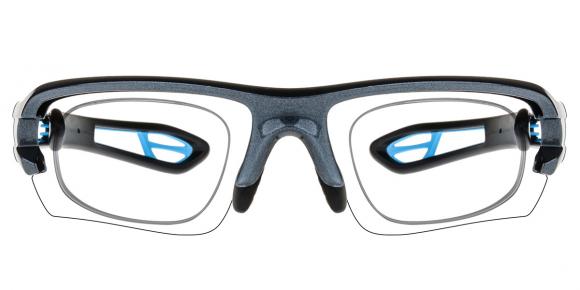
Safety glasses with elastic bands that attach to the back of temples are more helpful during sports. These bands can maintain safety glasses more effectively. Hunting, golfing and sport shooting require both acute vision and best eye protection, so that you should choose lenses with a high impact rating. Lenses with amber or yellow tints can enhance contrast during dim conditions. While fishing, lenses with a polarized tint can reduce glare and wrap-around frames can protect your eyes against fish hooks. Photochromic lenses are perfect in changing outdoor lighting conditions. During paintball playing, additional head shields are necessary.
Ralated Q&A
- prescription swimming goggles
- Are mesh goggles safe?
- Can prescription glasses be used as safety glasses
- scuba diving prescription goggles,
- What are night vision goggles used for?
- What are goggles used for in the lab?
- Why do people wear goggles under their helmet?
- What are the best goggles for low light ?
- Are polarized lenses good for snowboarding?
- Is there a difference between safety glasses and safety goggles?